Mastering Microservices with Spring Boot
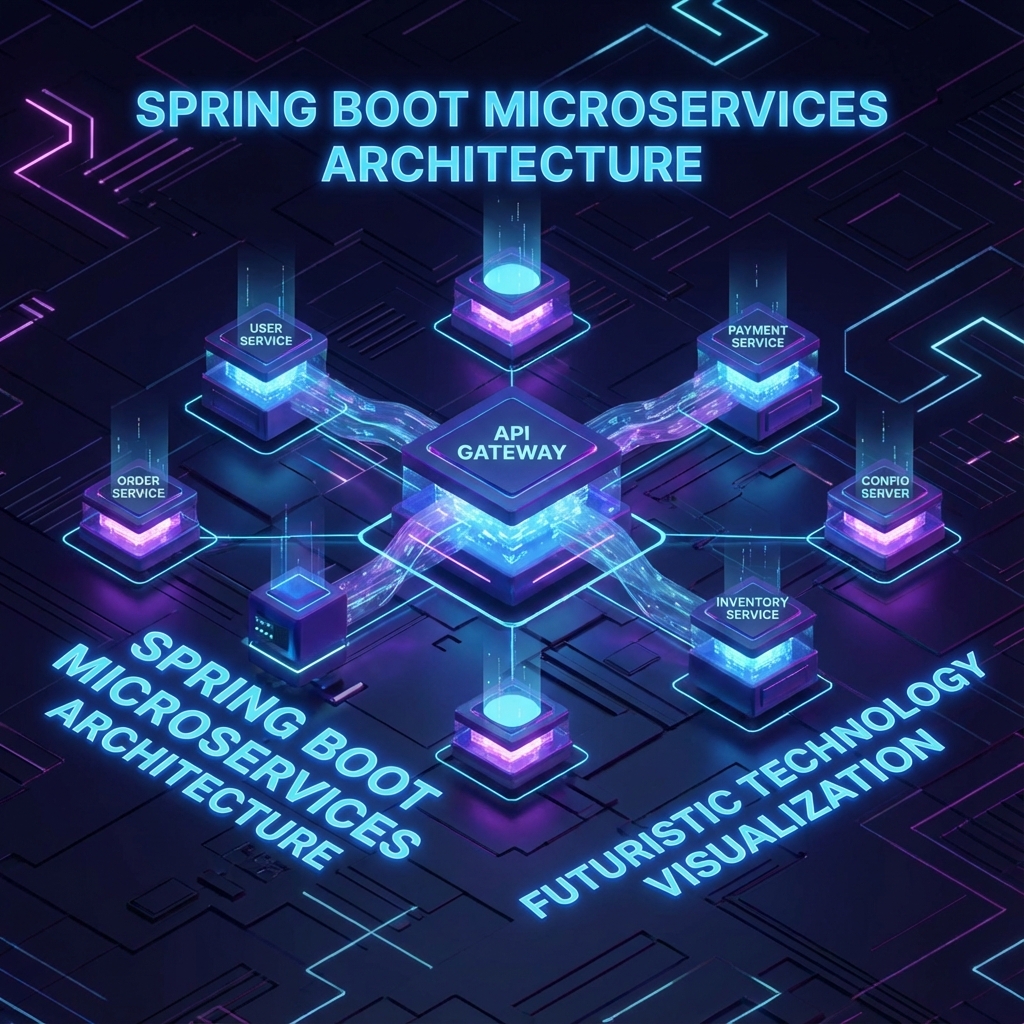
In the modern era of software development, Monoliths are becoming a thing of the past for large-scale applications. The shift towards Microservices Architecture has revolutionized how we build, deploy, and scale applications. As a Java developer, Spring Boot is your ultimate weapon in this domain.
Why Microservices?
Microservices allow you to break down a complex application into smaller, independent, and loosely coupled services. Each service handles a specific business capability and communicates with others via well-defined APIs.
- Scalability: Scale individual services based on demand.
- Resilience: Failure in one service doesn't bring down the whole system.
- Flexibility: Use different technologies for different services.
Setting Up with Spring Boot
Spring Boot makes creating microservices effortless. Here is a simple example of a REST Controller in Spring Boot:
@RestController
@RequestMapping("/api/products")
public class ProductController {

    @GetMapping
    public List getAllProducts() {
        return productService.findAll();
    }

    @PostMapping
    public Product createProduct(@RequestBody Product product) {
        return productService.save(product);
    }
}
Service Discovery with Netflix Eureka
In a distributed system, services need to find each other. Hardcoding URLs is a bad practice. This is where Service Discovery comes in. Using Spring Cloud Netflix Eureka, services can register themselves and discover others dynamically.
Inter-Service Communication
Services often need to talk to each other. You can use:
- RestTemplate: The synchronous, blocking client (legacy).
- WebClient: The modern, non-blocking, reactive client.
- Feign Client: A declarative HTTP client that makes calling APIs as easy as calling an interface method.
Conclusion
Transitioning to microservices involves a learning curve, especially regarding distributed transactions, data consistency, and monitoring. However, with the Spring Boot ecosystem, you have robust tools to tackle these challenges effectively.

About the Author
Prashant Yadav is a Software Engineer specializing in Java, Spring Boot, and Cloud Technologies. He loves building scalable backends and solving complex distributed system problems.
Need help with your next project?
I am available for freelance work and consulting on Backend Systems and Spring Boot.
Get in Touch